





A plumbing failure never checks whether the office is open. Picture a supply line bursting at 2am: the longer it runs, the further the water reaches. In Fort Wayne, we pick up emergency calls around the clock. You talk to a live person who gathers the basics and dispatches a crew. The goal on that first visit is simple: stop the water and stop the damage from spreading.
Here is what happens when you call. First come three questions: what is the source, is it still flowing, and is the electricity safe? If you can reach the main shutoff, we talk you through closing it. Once we arrive, we find the source, check which rooms are wet with moisture meters, and start removing water. We lift furniture onto blocks or carry it and your belongings clear of the wet floor.
Water damage grows by the hour, which is why a fast start counts. It takes only hours for drywall to draw moisture up the wall. Cupping shows up in wood flooring. In 24 to 48 hours, mold may start to grow. Same-night work usually means a smaller, quicker, less costly job than waiting out the weekend. Not certain it counts as an emergency? Call, and you will get a straight answer.
Why Emergency Water Damage Restoration Is Not a DIY Job
In an emergency, the hard part is not mopping up what you can see. What takes skill is figuring out where everything else has soaked in. Baseboards, wall cavities and the space beneath flooring all take on water in minutes. Our team uses moisture meters and thermal imaging to find it, so the wet areas you cannot see are treated the same night instead of being found weeks later as a smell or a stain.
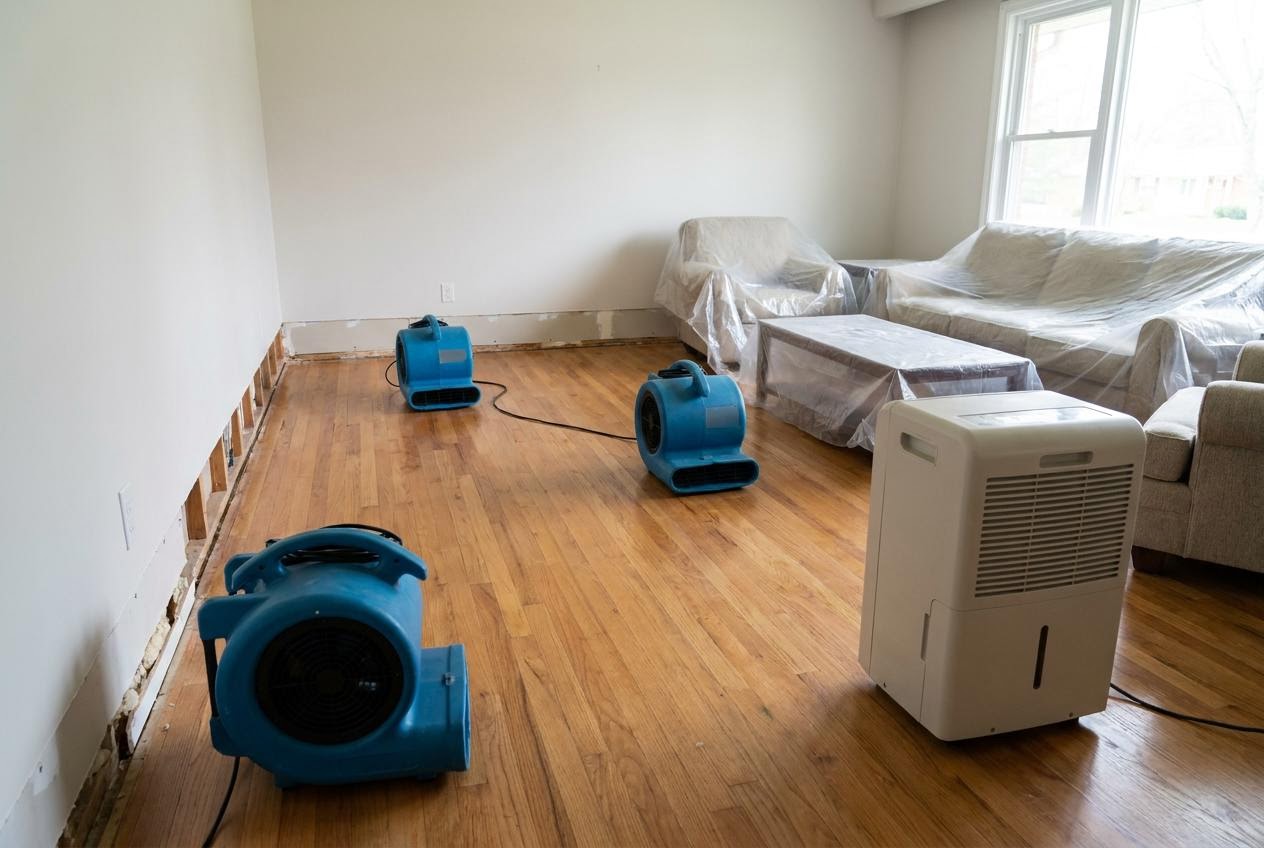
Our night crew arrives with gear homes simply do not have, including commercial air movers, properly sized dehumidifiers and truck-mounted extractors. The crew is trained to stay safe near contaminated water and wet wiring, and from hour one it records the loss in photos and moisture readings. When it comes time to file a claim, that documentation helps. From the first night to a dry house, a single crew stays on your job.
Need Help With Emergency Water Damage Restoration?
Our IICRC-certified technicians are standing by to help.
Get Help: (781) 527-9517Your Emergency Water Damage Restoration Questions Answered
How We Handle Emergency Water Damage Restoration
We follow a proven process to ensure every job is completed to the highest standards. Here's how we handle emergency water damage restoration from start to finish:
Answer the Call
A person answers at any hour, asks about the source, the rooms affected and any safety concerns, and tells you what to do while a crew is on the way to your home.
Shut Off the Water
First we rule out shock and contamination dangers, and then whatever feeds the water gets shut down or isolated. Until the flow ends, no other step does much good.
Remove Standing Water
We pull standing water with pumps and truck-mounted extractors, move furniture out of wet areas, and map hidden moisture in walls and floors with meters and thermal imaging.
Set Equipment and Plan
The crew does not go until the drying equipment, meaning air movers and dehumidifiers, is running. We then walk you through what we found, what the next 3 to 5 days of drying look like, and what your insurer will need.
How to Tell You Need Emergency Water Damage Restoration
Catching these issues early helps you avoid costly problems and protect your property. Watch for these telltale signs that professional help is needed:
- Carpet, drywall or hardwood has been soaked for more than a few hours.
- The water keeps running, and the shutoff valve is out of reach or nowhere to be found.
- You came home to water and do not know how long it ran.
- A water heater tank has failed and is emptying across the floor.
- Water from a floor above is streaming down interior walls.
- Pooled water is creeping over the floor into neighboring rooms or onto the staircase.
- Sewage has backed up, or the water is dark with a foul odor.
Early Action Saves Money
What seems like a minor issue today can turn into a major expense tomorrow. If you notice any of these signs, contact Fort Wayne Restoration at (781) 527-9517 for a prompt evaluation.
Want a Professional Opinion?
Call Fort Wayne Restoration to discuss your emergency water damage restoration needs with a IICRC-certified technician.
Get Help: (781) 527-9517DIY vs. Professional Emergency Water Damage Restoration
Some simple tasks are suitable for DIY, but most water damage work benefits from professional tools, training, and experience. Here's a comparison:
| Factor | DIY Approach | Professional Service |
|---|---|---|
| Claim documentation | Phone photos, if you remember | Photos and moisture readings from hour one |
| Contents protection | Items left sitting on wet floors | Belongings lifted clear by the team |
| Extraction speed | Small wet vac emptied every few gallons | Hundreds of gallons out by truck unit |
| Moisture you cannot see | Guesswork by touch and sight | Thermal camera plus meter readings |
| Response at night | Whatever towels and buckets you own | A staffed team ready around the clock |
Emergency Water Damage Restoration Prevention Tips
Taking preventive measures can help you avoid costly water damage issues down the road. Here are our expert recommendations:
- Every member of the household should know where the main water valve is and how it closes.
- A sump pump should be tried out before storms arrive, ideally with a backup battery installed.
- Keep the number of an emergency restoration company saved in your phone before you need it.
- Know where your electrical panel is so power to wet rooms can be cut safely.
- Important paperwork and valuables belong above floor level, most of all on the lowest story.
- Place leak sensors near the water heater, washing machine, dishwasher and under sinks.
Schedule Your Emergency Water Damage Restoration Service
Don't let water damage problems get worse. Call Fort Wayne Restoration now for prompt, professional service.
Get Help: (781) 527-9517